One of the most common questions before committing to an epoxy garage floor is some version of "how long will it last?" The honest answer ranges from two years to twenty-plus, and the difference isn't random. It comes down to a predictable set of factors you can actually control.
The wide range — and why it exists
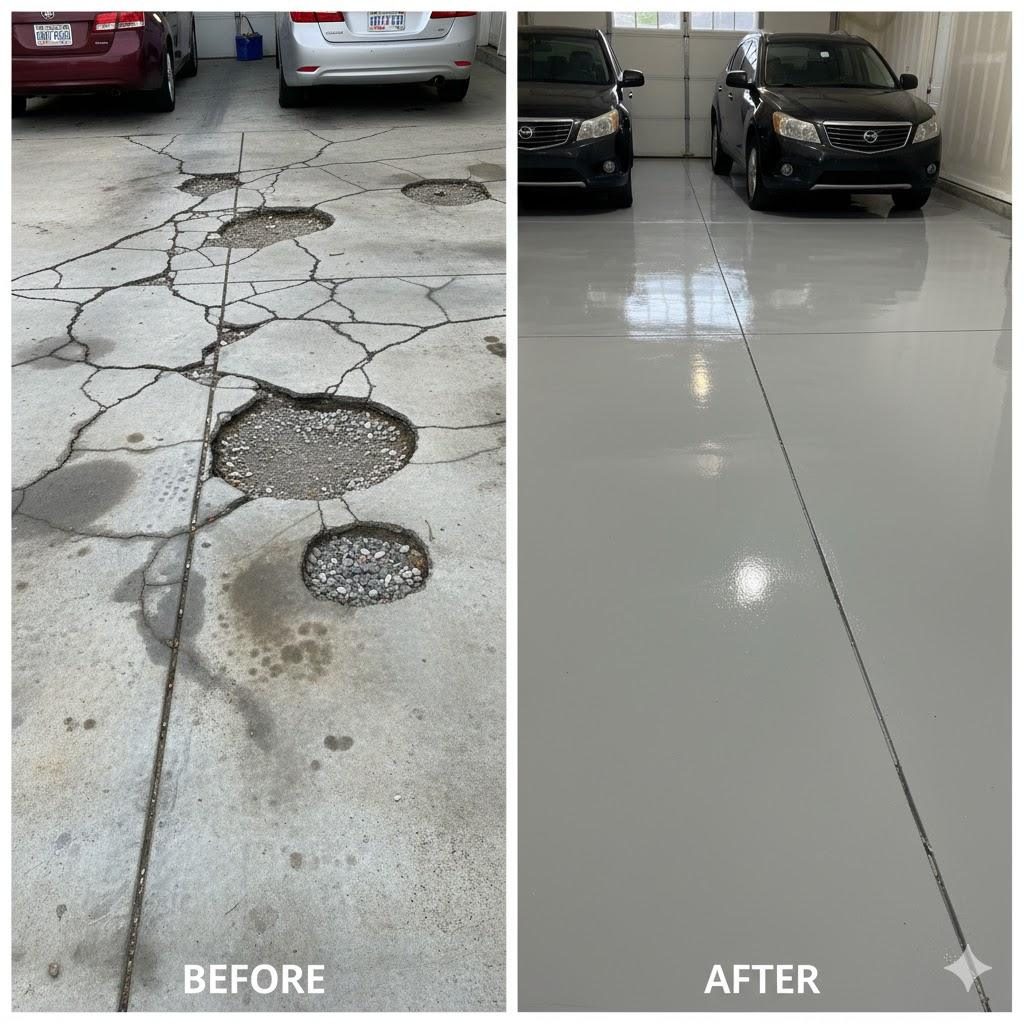
A two-year epoxy floor and a twenty-year epoxy floor are both real outcomes. The difference isn't usually luck or brand choice — it's the combination of surface preparation quality, system specification, application conditions, and how the floor is used afterward.
Lifespan by system type
DIY kits from hardware stores: 1–3 years typical
These are thin, low-solids products that rely on acid etching rather than mechanical grinding. In favorable conditions — clean slab, no moisture, minimal traffic, no direct sunlight — they might last 2–5 years. Under typical garage conditions with regular vehicle traffic, 1–3 years is more realistic. Hot-tire pickup, peeling at edges, and UV yellowing are the most common failure modes.
Professional solid-color single-coat systems: 5–10 years
A professionally installed system — mechanically ground, properly primed, finished with a quality clear — typically lasts 5–10 years in a residential garage under normal use. The prep quality is the dominant factor.
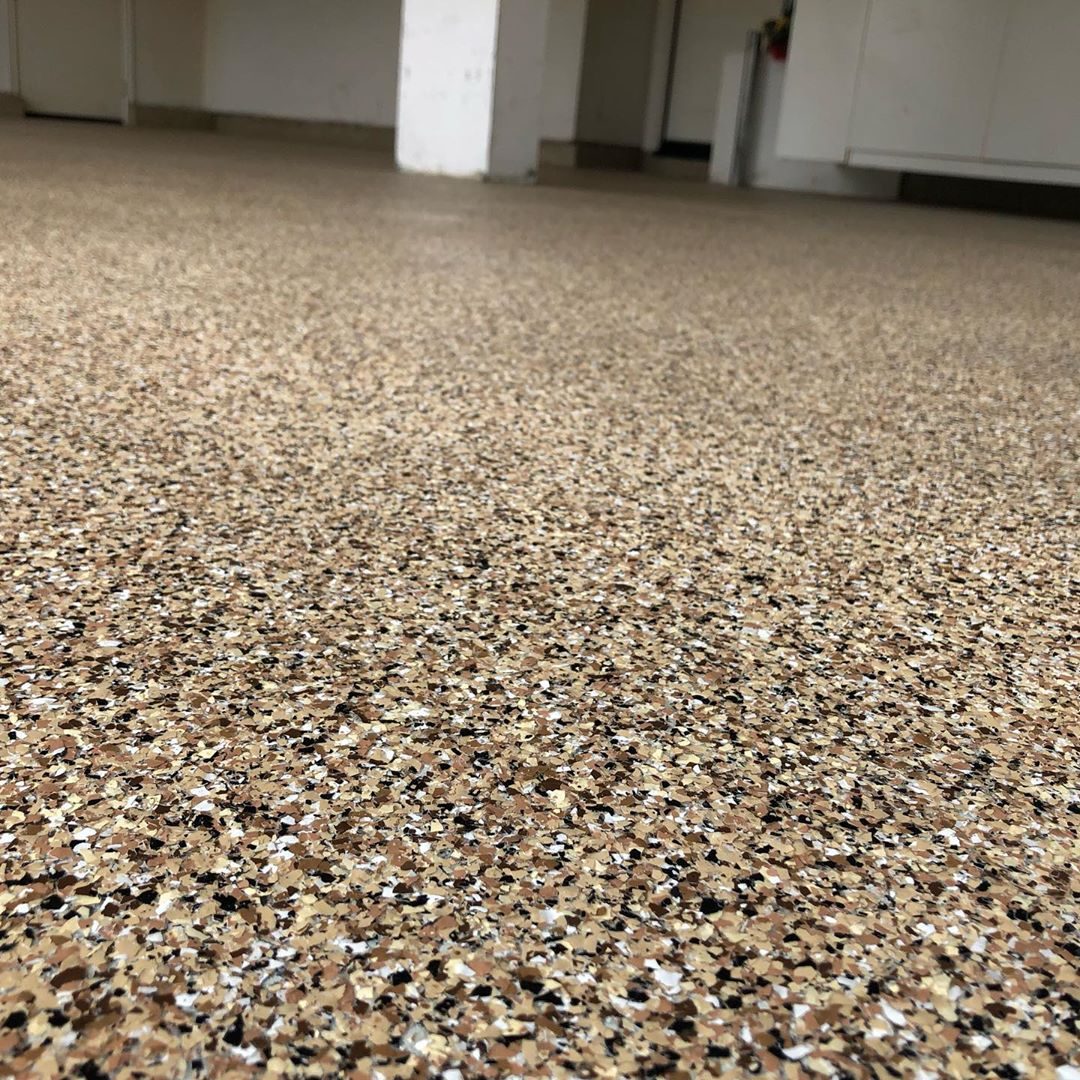
Professional full flake systems with polyaspartic topcoat: 10–20 years
This is the sweet spot for residential garages. A properly installed full broadcast flake system — epoxy or polyurea base, full flake broadcast, polyaspartic clear topcoat — installed over a mechanically ground slab should realistically last 10–20 years under normal residential use. The polyaspartic topcoat's UV stability prevents yellowing, and its abrasion resistance protects the decorative layer beneath. Well-installed floors of this type routinely approach the 15-year mark looking genuinely good.
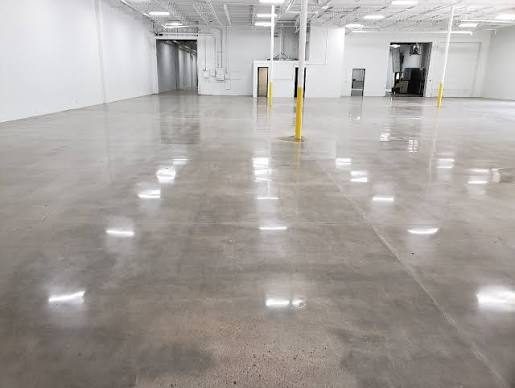
Industrial high-build systems: 10–15 years under industrial traffic
High-build epoxy systems in warehouses, facilities, and government buildings are specified differently — thicker, harder, often with anti-slip aggregate and chemical resistance. Under industrial traffic (forklifts, pallet jacks, heavy equipment), a properly specified and installed system should last 10–15 years before major refurbishment, though high-traffic lane areas may need topcoat refresh before the full system needs replacing.
What shortens a floor's lifespan
- Poor surface preparation — inadequate grinding, skipped moisture testing, unaddressed contamination. This is the dominant factor and causes the majority of failures.
- Hot tire pickup — when heated tires contact certain epoxy formulations. Virtually eliminated by quality polyaspartic topcoats.
- UV exposure — standard aromatic epoxy topcoats yellow and chalk in sunlight. Polyaspartic is UV-stable and doesn't have this problem.
- Chemical abuse — extended contact with concentrated solvents, acids, or highly alkaline chemicals can degrade topcoats.
- High abrasion traffic — heavy foot traffic, dragged equipment, steel wheels. A residential system isn't designed for warehouse loads.
- Point loads — jack stands and equipment feet dent topcoats over time. Rubber or wooden pads under these prevent it.
What extends a floor's lifespan
- Quality prep — always — diamond grinding, moisture testing, crack repair, and proper surface profile. The highest-return investment in floor longevity.
- Polyaspartic topcoat — addresses UV yellowing, improves abrasion resistance, better chemical resistance to road salt.
- Regular sweeping — fine grit acts like sandpaper on the topcoat. Weekly sweeping in a used garage dramatically slows wear.
- Prompt spill cleanup — the sealed surface makes cleanup easy; taking advantage of that ease protects the floor.
The recoat option: extending life without full replacement
When a topcoat shows wear — scuffing in high-traffic lanes, loss of gloss — the solution is often a topcoat refresh rather than full floor replacement. A topcoat refresh involves cleaning the existing surface, lightly abrading it for adhesion, and applying a fresh polyaspartic topcoat. This is significantly less expensive than starting over — no grinding, no base coat, no flake. If the base coat and decorative layer are in good shape (which they usually are since the topcoat protects them), a refreshed clear coat can add another 5–10 years.
This is why the quality of the base system matters so much: a floor installed correctly the first time gives you the option to refresh rather than replace. A floor that failed due to poor prep has to be fully removed and started over, costing more than doing it right initially.
The realistic expectation
A properly installed professional flake system with a polyaspartic topcoat, maintained with basic care, should be the last garage floor you ever install. In 10–12 years you might refresh the topcoat at a fraction of the original cost. In 20 years you'll re-evaluate. That's a very different proposition from a hardware store kit that needs replacing in 2–3 years.
Signs your existing floor needs attention
- Visible yellowing of the clear coat, particularly near the garage door
- Loss of gloss in traffic lanes that doesn't improve with cleaning
- Hot-tire pickup — the floor lifting when vehicles move after parking
- Widespread fine scratching visible in raking light
- Peeling or delamination at edges or seams
Some of these conditions are repairable with a topcoat refresh. Others — particularly widespread delamination — indicate a base adhesion failure requiring more significant intervention. A site assessment gives you an honest picture of what the floor actually needs.