Home / Floor Maintenance
Protect your investment

How to keep your floor looking great for years.

A quality epoxy or polished concrete floor is low-maintenance — but not no-maintenance. These guides cover exactly what to do, what to avoid, and how to handle every situation your floor will encounter.

Epoxy & resinous coatings

Caring for your coated floor.

Epoxy and polyaspartic floors are sealed, non-porous surfaces — which makes them far easier to clean than bare concrete. These habits keep them looking sharp for years.

Daily / as needed

Dust mop or sweep

Fine grit and sand are the topcoat's main enemy — under foot and vehicle traffic they act like fine sandpaper, slowly scratching the surface. A quick dust mop or soft broom removes them before they do damage. In a working garage this is the single highest-return habit you can build.

Weekly or when visibly dirty

Damp mop with pH-neutral cleaner

Mix a pH-neutral concentrate at the label dilution — typically 1–2 oz per gallon of warm water — and damp mop the floor. No rinsing needed with quality neutral cleaners. Avoid over-wetting; a damp mop, not a soaking wet one, is the right level. Our Leading Edge Clean (coming soon) is formulated specifically for this.

Immediately

Wipe up spills promptly

Because epoxy is non-porous, most spills sit on the surface until you deal with them. The key is not letting chemicals — especially automotive fluids, road salt runoff, or harsh solvents — sit and concentrate. Wipe up, then follow with a damp mop of the area. Most spills on a quality polyaspartic topcoat clean up completely with just a cloth.

Winter / when applicable

Mop more frequently in salt season

Road salt and de-icing chemicals tracked in on tires are mildly corrosive and concentrate as water evaporates. In Utah and Idaho winters, mopping weekly rather than monthly is the right frequency. A pH-neutral cleaner removes salt residue without the combined damage that acidic cleaners add to it.

✓ Safe for your coated floor

  • pH-neutral floor cleaner concentrates
  • Warm water alone for light cleaning
  • Soft microfiber mop heads
  • Soft-bristle scrub brush for stubborn spots
  • Rubber or wooden pads under jack stands
  • Polypropylene or cloth-backed entry mats
  • Mild dish soap (Dawn) for oil spots in a pinch
  • Acetone for tough stains — applied briefly, rinsed quickly

✗ Avoid these on coated floors

  • Acidic cleaners — vinegar, citrus-based, lime removers
  • Bleach (occasional use is okay; routine use degrades the topcoat)
  • Ammonia-based cleaners
  • Abrasive pads or scouring powders
  • Steel wool or metal scrapers
  • Rubber-backed mats left in place for extended periods
  • Dragging heavy objects — use a dolly or plywood
  • Jack stands without pads — they dent the topcoat over time

The pH question — why it matters

The scale goes from 0 (strongly acidic) to 14 (strongly alkaline), with 7 being neutral. Epoxy and polyaspartic topcoats are most stable when cleaned with solutions in the 6–8 pH range. Acidic cleaners etch and soften certain topcoat chemistries over time. Many popular household cleaners — including products marketed as "natural" — are acidic (vinegar, citrus, many tub-and-tile cleaners). Check labels or use a floor-specific neutral concentrate. When in doubt, warm water is always safe.

Polished concrete

Maintaining your polished floor.

Polished concrete is durable and genuinely low-maintenance — but the things that degrade it are specific and preventable. Here's the full picture.

Daily in commercial / weekly residential

Dust mop religiously

This is more critical for polished concrete than for any other floor type. The gloss on a polished floor comes from how fine the microscopic surface scratches are — coarser grit creates coarser scratches, which dull the finish. Sand and grit underfoot act like a diamond abrasive against that polished surface. Remove them before they remove the shine.

Weekly or as needed

Damp mop with pH-neutral cleaner — strictly neutral

For polished concrete, "pH-neutral" is non-negotiable, not a preference. Acidic cleaners — including diluted vinegar, most citrus cleaners, and many general-purpose products — chemically etch the calcium silicate in the polished surface. Even mild acids used regularly create cumulative dulling that eventually requires professional re-polishing to fix. Stick to pH 6–8 formulations only.

Immediately

Wipe up standing water and liquids

Polished concrete is more porous than a coated floor — the penetrating guard provides stain resistance, but it's not as impervious as a sealed topcoat. Extended standing water, oils, or colored liquids can penetrate and stain, particularly if the guard has depleted. Clean up promptly; don't let spills sit and dry.

As needed / when gloss reduces

Schedule professional re-burnishing

In high-traffic areas, the microscopic peaks of the polished surface gradually wear down, reducing reflectivity. A professional re-burnish with a high-speed burnisher and the right crystallization pad restores the shine without removing concrete. In commercial settings this may be monthly; in a residential polished floor it may be every few years.

✓ Safe for polished concrete

  • pH-neutral cleaners formulated for polished concrete or stone
  • Warm water alone for light maintenance
  • Soft microfiber dust mops and mop heads
  • Auto-scrubbers with soft pads (commercial settings)
  • Penetrating guard reapplication (every 1–3 years)
  • Professional re-burnishing to restore gloss

✗ Never on polished concrete

  • Acidic cleaners — vinegar, citrus, lime, CLR, most "eco" cleaners
  • Alkaline cleaners — bleach, ammonia, heavy-duty degreasers
  • Abrasive pads, scrubbing powders, or steel wool
  • Wax (it builds up and dulls the look — the floor doesn't need it)
  • Stripping products (they etch the surface)
  • Excessive water — damp mop, not soaking wet

Guard reapplication — the most overlooked maintenance step

The penetrating guard applied at the end of your polishing installation gradually depletes in high-traffic areas over time. When it's gone, the floor is still hard and polished — but it's more susceptible to staining from liquids and oils. Reapplication every 1–3 years (depending on traffic) is a simple process that restores stain resistance without affecting appearance. It's the most cost-effective maintenance step available for a polished floor and most people skip it entirely until they notice a problem. We offer guard reapplication as a maintenance service — reach out and we'll assess whether it's time.

Stain removal guide

How to handle specific spills and stains.

Most stains on a sealed floor are surface deposits, not permanent damage. Here's the right approach for the most common ones — and what to do when home remedies aren't enough.

The golden rule: act quickly. The longer any substance sits, the greater the chance of penetration or staining. Most spills on a quality coated or guarded floor clean up completely if addressed within a reasonable time.

Stain / substanceCoated (epoxy) floorPolished concreteWhat NOT to do
Motor oil, grease Absorb fresh oil with a cloth or oil-dry. Damp mop with pH-neutral cleaner or a drop of dish soap. Usually removes completely. Absorb, then damp mop with neutral cleaner. Apply penetrating guard to treated area after cleaning. Old stains may require professional treatment. Don't use degreasers with high alkalinity — they can attack the surface over repeated use.
Road salt / ice melt residue Damp mop with pH-neutral cleaner. The key is frequency in winter — don't let salt accumulate and concentrate as water evaporates. Damp mop with neutral cleaner. Avoid citrus-based "ice melt removers" — they're often acidic and will etch the polish. Don't use acidic cleaners marketed for salt/ice melt removal — they make things worse on polished or coated surfaces.
Tire marks (rubber transfer) Usually wipes up with a damp cloth. Stubborn marks: apply a small amount of acetone or isopropyl alcohol to a cloth, wipe, then rinse with water immediately. Damp cloth or mop usually removes it. If stubborn, use a neutral degreaser diluted appropriately — test in an inconspicuous area first. Don't confuse tire marks (surface deposit) with hot-tire pickup (adhesion failure). Marks wipe off. Peeling requires professional assessment.
Paint (fresh latex) Wipe immediately with a damp cloth — latex paint on a sealed floor cleans up easily when fresh. Same — wipe immediately. Fresh latex is easy. Dried latex is much harder. Once latex paint dries, don't scrub aggressively with abrasive pads. Use a plastic scraper carefully, then solvent.
Paint (dried / oil-based) Plastic scraper to lift the bulk (not metal — it scratches). Then a solvent like acetone on a cloth, rubbed gently. Rinse with water immediately after. Plastic scraper carefully, then try warm water first. If needed, a neutral-pH paint remover. Avoid solvents on polished concrete — they can affect the guard. Never use metal scrapers. Never let solvents dwell — apply, wipe, rinse promptly.
Rust stains Commercial rust remover formulated for sealed surfaces, tested in an inconspicuous area first. Apply briefly, rinse thoroughly. For heavy rust, repeat rather than using a more aggressive product. This is trickier — rust can penetrate a depleted guard into the concrete itself. A poultice of rust remover and absorbent clay may help draw it out. Severe penetrated rust may require professional treatment. Don't use acidic rust removers (they often contain phosphoric or oxalic acid) on polished concrete without testing — they etch the surface.
Antifreeze / coolant Absorb and wipe up. Antifreeze is water-soluble and cleans easily from a sealed surface. Damp mop with neutral cleaner to finish. Same. Antifreeze is one of the easier automotive spills on either floor type — clean up while wet and it typically leaves no trace. Don't let it sit — antifreeze is colored and can stain polished concrete if allowed to dry.
Battery acid Neutralize immediately with baking soda before cleaning — pour a small amount over the spill to stop the acid reaction, then wipe and mop. Rinse the area thoroughly. Battery acid is aggressive and will attack a coated floor if left. Same immediate neutralization with baking soda is critical. Battery acid (sulfuric acid) will etch polished concrete if not neutralized immediately — this may require professional re-polishing of the affected area. Don't mop without neutralizing first — you'll spread an active acid across the floor. Act fast.
Concrete sealer / guard (spilled during DIY) Wipe up immediately before it cures. Once cured, it may need to be carefully abraded off — contact us before attempting aggressive removal. Wipe up immediately. Cured sealer on polished concrete usually needs to be buffed off by a professional to avoid scratching the polished surface. Don't try to dissolve cured sealer with solvents on a polished surface without professional guidance.

When home remedies aren't enough

Some stains penetrate deeply, require professional-grade products, or involve surface damage that needs re-polishing or topcoat repair. If you've tried the approaches above and the stain remains, or if you're dealing with peeling, bubbling, or cracking rather than just a stain, contact us. We can assess whether the issue is cosmetic or structural, and whether it's something we can address as a maintenance visit rather than a full reinstall.

Utah & Idaho seasonal care

What each season does to your floor — and how to handle it.

The Intermountain West climate creates specific seasonal challenges. Here's how to adjust your care routine through the year.

Spring

Salt cleanup & moisture watch

The tail end of salt season — rinse and mop thoroughly to remove accumulated salt residue from winter. Check slab edges and door thresholds for any signs of water intrusion from snowmelt. Spring brings Utah's highest humidity; watch for any new condensation on the floor surface, which can indicate moisture pressure building under the slab.

Summer

Heat and UV awareness

High temperatures don't significantly affect a quality polyaspartic-finished floor. Polished concrete floors in direct sun may feel warm underfoot but aren't harmed. If you have a garage or space that gets afternoon sun through open doors, ensure the topcoat is UV-stable (polyaspartic, not aromatic epoxy). Summer is also the right season for any professional maintenance — ideal conditions for re-burnishing or guard reapplication.

Fall

Pre-winter preparation

Fall is the best time to address any topcoat wear, perform professional re-burnishing on polished floors, or schedule guard reapplication — before the salt season starts again. Check and clean perimeter edges and expansion joints. Place entry mats before the wet season begins. If you've noticed any areas of reduced gloss or surface wear, fall is the time to address them while conditions are ideal.

Winter

Salt season protocol

Increase mopping frequency — weekly rather than monthly. Use only pH-neutral cleaner; don't add a salt-removing acidic product. Place mats at garage entry points to catch grit and salt from tires. Let vehicles sit in the driveway briefly on very cold days before pulling into the garage — tires cooled slightly are less likely to leave rubber marks. Avoid parking on floors with spilled coolant or oil that hasn't been fully cleaned, as these concentrate under vehicles during cold weather.

Temperature and your floor

Cold temperatures

Below-freezing floors

A properly installed coated floor handles freezing temperatures without problem — the coating is cured and stable. What changes is the behavior of liquids on it. Water freezes faster on a cold garage floor; clean up wet tire tracks before they freeze into ice. Salt tracked in before the floor temperature drops to freezing can temporarily be trapped on the surface — a warm mop with neutral cleaner when the space warms up handles it.

High heat

Vehicles after highway driving

Hot tires from highway driving are one of the more common issues with improperly installed floors. On a quality polyaspartic topcoat over a properly prepared slab, hot tires should not cause pickup. If you notice the floor lifting when you move vehicles after parking, this is an adhesion issue that warrants a professional assessment — it won't resolve on its own and will worsen over time.

Temperature swings

Thermal cycling and joints

The control joints in your slab allow the concrete to expand and contract with temperature. If you notice hairline cracking reappearing at joint locations, it's the slab moving normally — a semi-rigid joint filler that has hardened over time may need to be refreshed. Contact us before attempting to fill or caulk joints yourself, as the wrong material makes the situation worse.

Long-term maintenance schedule

What to do — and when — over your floor's life.

A quality floor system should last decades with the right care. Here's the full maintenance timeline, from daily habits through a 20-year look-ahead.

Daily / each use

Sweep or dust mop

Remove grit and debris before it abrades the surface. This single habit does more to preserve floor life than any other maintenance step.

Weekly (working space) / monthly (light use)

Damp mop with pH-neutral cleaner

Full cleaning with appropriate dilution. Adjust frequency based on how much traffic the floor actually sees. A residential garage with one vehicle gets monthly; a commercial space with foot traffic daily gets weekly at minimum.

After every heavy event

Spot clean and inspect

After a vehicle repair, a large spill, moving heavy equipment, or any event that stresses the floor, do a quick walk to spot and clean anything before it sets. This is also when to look for any new damage — chips, delaminating edges, or cracking at joints.

Every 1–3 years (polished concrete)

Guard reapplication — polished floors

Penetrating stain guard depletes in high-traffic areas over time. Reapplication restores stain resistance and is a simple process — clean the floor thoroughly, apply the guard, allow to penetrate, buff off the excess. Commercial floors on heavy traffic may need this annually; residential floors every 2–3 years. We offer this as a maintenance service.

Every 2–5 years (polished concrete)

Professional re-burnishing

High-speed burnishing with the right pad restores gloss in traffic-worn areas without removing concrete. In commercial settings this may be part of an annual maintenance program. Residential polished floors may need it every 3–5 years depending on use.

10–15 years (coated floors)

Topcoat assessment and potential refresh

A quality polyaspartic topcoat on a residential garage floor should look good for 10–15 years under normal use. At that point, high-traffic lanes may show wear — reduced gloss and minor surface scratching. A topcoat refresh (clean, lightly abrade, new polyaspartic clear) costs a fraction of a full reinstall and extends the system life by another decade. The base coat and decorative flake beneath it are typically still in excellent shape.

20+ years

Full system evaluation

A floor installed correctly the first time may simply need a topcoat refresh or, at most, a new base coat over an intact flake layer. True full replacement — grinding back to concrete and starting over — is rarely needed on a properly installed floor even at the 20-year mark. The floor's history and current condition determine the right path forward.

Document your floor

Keep a simple record of when your floor was installed, what system was used, and any maintenance performed. This information helps us give you accurate advice when you call years later — whether it's about a stain, a topcoat refresh, or an addition to the space that needs the same coating. We keep records of every floor we install, but having yours on hand is useful too. Your warranty documentation is the starting point.

Done-for-you service

Let us maintain it for you.

We install floors that are easy to maintain — and we also offer recurring professional maintenance so you never have to think about it. Our crews bring the right equipment, the right products, and the same attention to detail we brought on installation day.

Why it matters

Professional cleaning extends your floor's life — significantly.

A mop and bucket does a good job. A professional auto-scrubber with the right pad pressure, the right chemistry, and proper dilution control does a measurably better one. Our equipment removes embedded grit, road salt residue, and tire deposits from the surface texture in a way a mop can't match — and we use the same pH-neutral chemistry that protects your topcoat or polish rather than degrading it.

  • Auto-scrubbers cover large areas consistently — no missed zones, no streaking
  • Controlled dilution means the right chemistry every time — not too strong, not too weak
  • We spot issues early — a maintenance visit is when we catch topcoat wear, joint movement, or new damage before it becomes a bigger repair
  • One less thing on your facility manager's plate

Maintenance plans

Essential
Quarterly Clean
4 visits per year
  • Full floor auto-scrub with pH-neutral solution
  • Edge and perimeter hand detail
  • Visual inspection and written condition report
  • Spot treatment of problem areas

Best for: residential garages, light commercial spaces, and facilities that handle their own routine cleaning between visits.

Popular
Standard
Monthly Clean
12 visits per year
  • Everything in Quarterly, monthly
  • Salt season deep cleaning (Nov–Mar, extra attention)
  • Annual burnish on polished concrete floors
  • Priority scheduling — you're always first on the calendar
  • 10% discount on any repair or topcoat refresh work

Best for: commercial spaces, shops, retail, and any facility that sees regular vehicle or foot traffic through the winter months.

Commercial & Industrial
Custom Program
Frequency tailored to your operation
  • Scheduled around your operating hours — nights, weekends
  • Zone-based cleaning for facilities that can't fully close
  • Documented maintenance logs for compliance and audits
  • Guard reapplication included in annual schedule (polished floors)
  • Topcoat condition monitoring with annual written assessment
  • 15% discount on all Leading Edge installation and repair work

Best for: warehouses, government facilities, manufacturing plants, and any space where the floor is a safety and compliance surface.

What a maintenance visit looks like

Step 1
Pre-sweep

We dust mop or blow out the floor first — removing loose grit and debris so it doesn't get driven into the surface during scrubbing.

Step 2
Auto-scrub

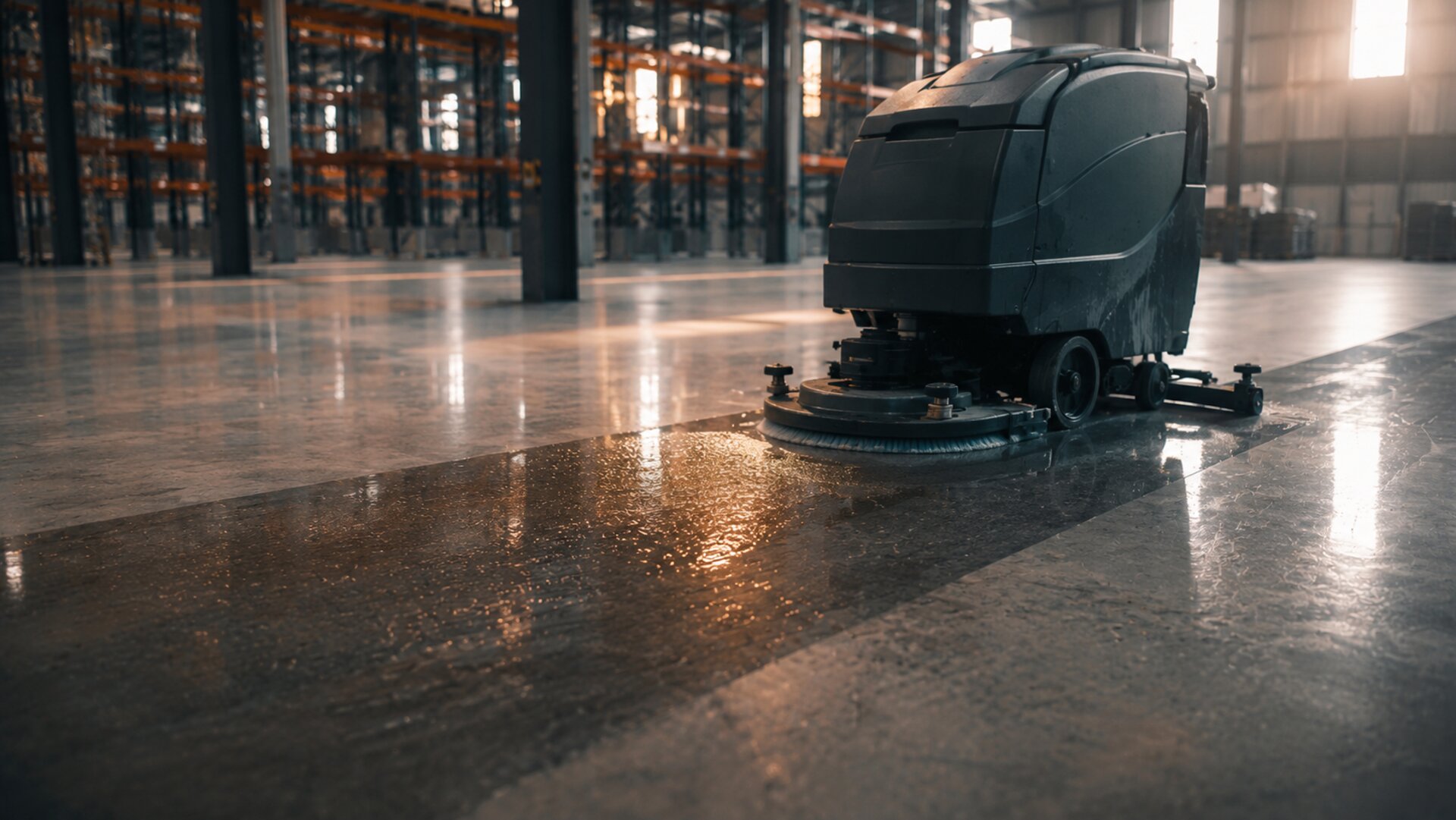
Our floor scrubber applies a controlled solution of pH-neutral cleaner at the right dilution, scrubs the surface with the appropriate pad, and vacuums it up clean in one pass.

Step 3
Edge & detail

The scrubber can't reach perimeters, tight corners, or around equipment. We hand-detail these areas to match the quality of the machine-cleaned field.

Step 4
Spot treatment

Any stubborn stains, tire marks, or buildup in specific areas gets targeted treatment — the right product for the stain type, applied and removed correctly.

Step 5
Condition inspection

We walk the floor after cleaning with fresh eyes. Every visit is when we catch early signs of topcoat wear, joint movement, new damage, or guard depletion — and we report what we find in writing.

Step 6
Report & sign-off

Commercial and industrial clients receive a written visit log with date, products used, areas covered, and any observations. Residential clients get a simple text or email summary.

Pricing is based on your floor size, frequency, and location. Tell us about your space and we'll put together a custom maintenance quote.

Request a maintenance quote
Coming soon

Leading Edge Clean™

A professional-grade pH-neutral floor cleaner concentrate formulated specifically for epoxy coatings and polished concrete — by the people who install them.

pH-balanced (6.5–7.5) — safe for polyaspartic, epoxy, and polished concrete
Super-concentrate — 1 gallon makes up to 64 gallons of ready-to-use solution
No-rinse formula — leaves no film, haze, or sticky residue
Low-foam — suitable for mop bucket or auto-scrubber
Phosphate-free, biodegradable surfactant system
Works in hard water — formulated for Utah and Idaho mineral content

Be the first to know when it's available — enter your email and we'll notify you at launch.

Questions about your floor?

Whether it's a maintenance question, a stain you can't remove, or a topcoat that's showing its age — we're glad to take a look and tell you what it needs.

Get in touch