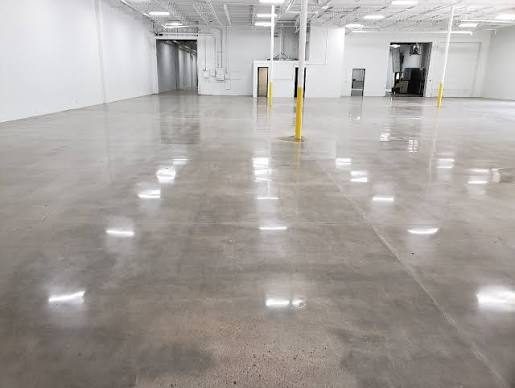
Choosing a flooring system for a warehouse or distribution facility is a decision that lives with you for a long time. Get it right and you have a floor that handles the traffic, keeps maintenance costs low, and holds up for a decade or more. Get it wrong and you're dealing with failing floors, unplanned downtime, and the expense of redoing work you already paid for.
There are three serious flooring options for warehouse and industrial environments: polished concrete, epoxy and resinous coatings, and urethane cement. Each has a specific strength profile, and the right choice depends heavily on what actually happens in your facility.
Polished concrete
What it is
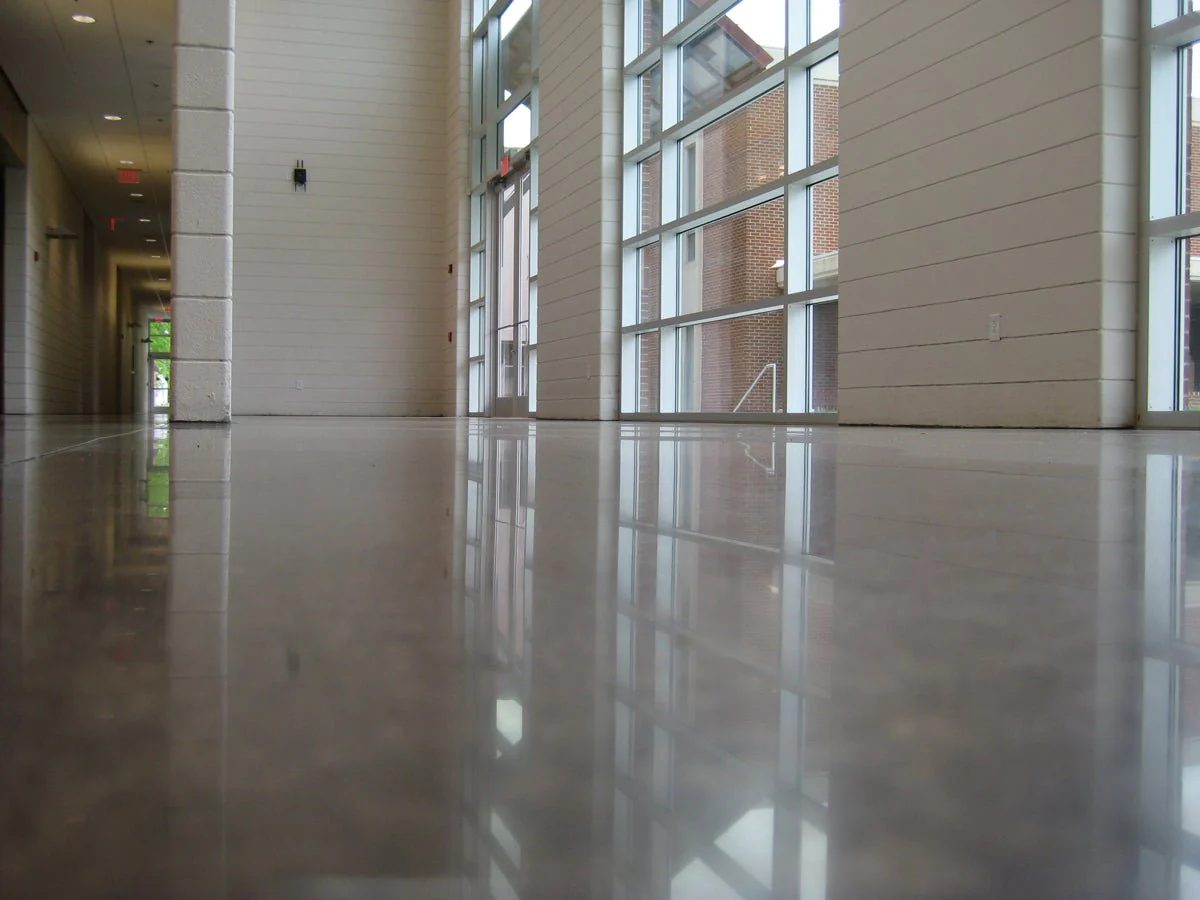
A mechanical process that refines the existing slab through diamond grinding and chemical densification, producing a hard, reflective surface without any coating. The finish is the concrete itself, densified and polished to a specified gloss level.
Strengths in warehouse applications
Exceptional long-term durability — with no coating to fail, polished concrete under forklift and pallet jack traffic lasts for decades. The densified surface gets harder with age and wears better than most coatings under sustained heavy use.
Lowest lifecycle maintenance cost — no recoating cycle ever. Maintenance is dust mopping, auto-scrubbing with pH-neutral cleaner, periodic re-burnishing to restore gloss in high-traffic lanes, and occasional guard reapplication. In a large warehouse, these savings over 20 years are significant.
Light reflectivity — a polished floor reflects significantly more light than bare concrete, often reducing lighting costs in large open spaces.
Dust elimination — raw concrete sheds fine dust constantly, contaminating inventory and equipment. A densified, polished surface locks dust down, improving air quality and protecting sensitive products.
No future downtime for recoating — once installed, there's no future process that requires clearing the floor and shutting down operations. A meaningful operational advantage for facilities that run continuously.
Limitations
Slip resistance in wet areas — high-gloss polished floors can be slippery when wet. Manageable with appropriate grit levels in wet areas or anti-slip treatments, but requires specification attention.
Staining vulnerability — without a coating, liquids can penetrate and stain if not cleaned promptly. A penetrating guard provides significant stain resistance but isn't as impervious as a sealed coating system.
Slab-dependent — the outcome depends heavily on the existing slab's condition. A slab in poor condition with heavy previous contamination may not be an ideal polishing candidate.
Best for
Large open warehouses and distribution centers with a sound slab. Facilities where long-term maintenance cost is a priority. Operations that can't accommodate future floor shutdowns for recoating.
Epoxy and resinous coating systems
What it is
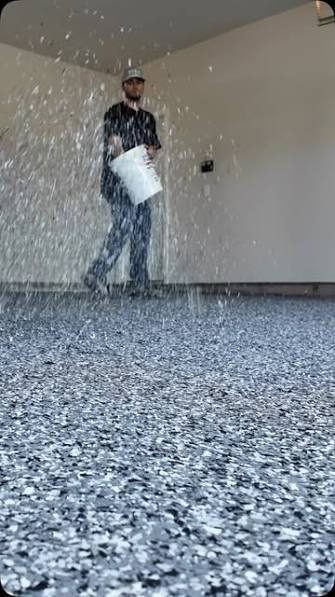
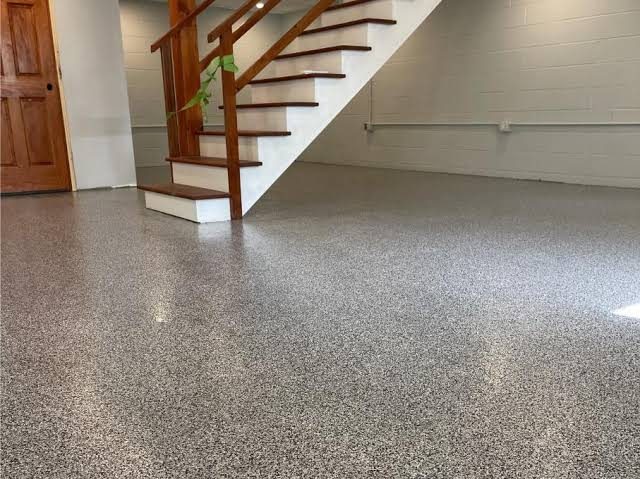
Applied coatings — most commonly multi-component epoxy with polyaspartic or polyurethane topcoats — that create a sealed, non-porous surface over the concrete. Can be broadcast with anti-slip aggregate or color-coded for safety zoning.
Strengths in warehouse applications
Complete slab sealing — a properly installed resinous system seals the concrete completely. Spills, chemicals, and liquids sit on the surface until cleaned up. A significant advantage in facilities handling liquids, chemicals, or food products.
Customizable safety features — color-coded zoning, anti-slip aggregate in specific areas, safety lane markings as part of the coating system. The ability to design the floor as a safety system is a meaningful advantage over polishing.
Chemical resistance options — various formulations offer specific resistance profiles for acids, solvents, and aggressive chemicals.
Forgiving of slab condition — epoxy coatings fill minor surface voids and, with broadcast aggregate, visually minimize slab imperfections. More forgiving of slab condition than polishing.
Limitations
Recoating cycle — epoxy systems eventually need topcoat refresh or full recoating. In a high-traffic warehouse, a topcoat may last 5–10 years. This requires scheduling downtime and recoating cost — ongoing operational and financial considerations that polished concrete doesn't have.
Coating failure modes — delamination, hot-tire pickup, and chemical attack are failure modes that polished concrete doesn't share. These typically result from installation shortcomings, but they're risks inherent to any coating system.
Best for
Facilities handling liquids, chemicals, or food products where complete slab sealing is important. Spaces that benefit from color-coded safety zoning. Manufacturing environments where specific chemical resistance is required. Facilities with slabs in poor condition not well-suited to polishing.
Urethane cement
What it is
A composite system combining cement hardness and buildability with polyurethane flexibility and chemical resistance. Applied as a troweled mortar, typically 3–6mm thick. The specialized tool for the most demanding industrial environments.
Strengths
Thermal shock resistance — urethane cement's primary distinction. Hot washdowns on cold floors, freezer floors, areas near ovens or sterilizers — these thermal shocks crack standard epoxy but are handled well by urethane cement's flexible binder.
Broad chemical resistance — excellent against food processing acids, cleaning chemicals, and disinfectants.
USDA/FDA appropriate — seamless, coved, non-porous surface meets requirements for food processing and food service environments.
High impact resistance — significant thickness provides cushioning against impact and resists heavy point loads better than thin coating systems.
Limitations
Cost — significantly more expensive than polished concrete or standard epoxy, both in material and labor. The right tool for specific environments, not an upgrade for general warehouses.
Appearance — utilitarian. Limited colors and matte, industrial appearance.
Specialized installation — requires specific expertise. Not every flooring contractor is equipped to install it correctly.
Best for
Commercial kitchens and food processing facilities. Breweries, wineries, and beverage production. Pharmaceutical and biomedical manufacturing. Areas with hot washdown requirements. Consistent severe chemical exposure that standard epoxy systems can't handle. Cold storage and freezer environments.
Direct comparison
Durability under heavy traffic: polished concrete ≥ urethane cement > epoxy in general
Chemical resistance: urethane cement > chemical-resistant epoxy > standard epoxy > polished concrete with guard
Thermal shock resistance: urethane cement >> epoxy > polished concrete
20-year maintenance cost: polished concrete < epoxy (with topcoat refreshes) < urethane cement (higher initial but high durability)
Installation cost: polished concrete ≤ epoxy < urethane cement
The practical decision guide
Large general warehouse with sound slab: start with polished concrete as the default. Facility handling significant liquids or chemicals: epoxy (chemical-resistant formulation) or urethane cement depending on severity. Food processing, commercial kitchen, or extreme thermal/chemical environment: urethane cement. Mixed facility: often a combination — polished concrete in dry warehouse areas, epoxy or urethane cement in processing zones. We help facility managers work through exactly these decisions as part of the specification process.