If you already have some kind of coating on your floor — old epoxy, latex paint, a sealer — the question of whether to coat over it or remove it first is one of the most important decisions in the project. Get it right and you save time and money. Get it wrong and you end up with a new floor that fails for the same reason the old one did.
The short answer
Sometimes you can coat over an existing surface. Sometimes you absolutely can't. The determining factors are the condition of the existing coating, its adhesion to the concrete beneath it, what it's made of, and whether moisture or contamination contributed to its current state. These require a physical inspection of the floor — there's no shortcut.
When recoating over existing material can work
Recoating is viable when all of the following are true:
- The existing coating is firmly adhered — no peeling, no lifting at edges or seams, no hollow sounds when tapped
- The surface is in good overall condition — no major cracking, no widespread coating degradation
- The existing material is compatible with the new system
- Moisture isn't the reason for existing deterioration — if moisture caused the first failure, it will cause the second one too unless addressed
- The existing surface can be mechanically prepared for adhesion
A topcoat refresh over a worn but intact epoxy system is the clearest example — the base coat is doing its job, the decorative layer is fine, and only the wearing surface needs attention.
When existing coating must be removed
The coating is delaminating or peeling
If the existing coating is lifting anywhere, it's an adhesion failure. Applying new coating over a failed adhesion layer just builds on a bad foundation. The peeling will continue and spread, bringing the new coating with it. The failed material has to come off, the slab assessed, and the underlying problem addressed before anything new goes down.
Moisture was the cause of failure
If the coating failed due to moisture vapor — typically showing as bubbling or blistering starting from the center of the slab — coating over it will produce the same result. The moisture hasn't gone away. The solution: remove the failed coating, test for moisture, install an appropriate moisture-mitigation primer system, then apply the decorative coating.
Incompatible existing material
Oil-based paints — flexible and chemically incompatible with rigid epoxy systems. Even well-adhered oil-based paint is problematic; in most cases it should be removed.
Wax or silicone-contaminated surfaces — some sealers contain wax or silicone that prevents adhesion of anything subsequent. These require complete removal.
Soft or rubber-like coatings — hard epoxy over a soft substrate creates a mismatch that leads to delamination under load.
Thick or uneven existing coating
Multiple previous coating applications can build up significant thickness that creates visible edges and transitions, and the total film build may exceed what the adhesion system can support. At some point it's cleaner and more reliable to start fresh.
The assessment process
Visual inspection
Walking the floor looking for peeling, lifting, bubbling, and cracking. The condition of edges and seams is particularly telling — lifting at the perimeter indicates release from the slab.
Adhesion testing
Apply a strip of strong tape firmly to the existing coating, press it down, and pull it up quickly. If the coating comes up with the tape, adhesion is poor and recoating isn't viable. If the tape releases cleanly, the adhesion may be adequate — with proper mechanical preparation.
Moisture testing
Even if the existing coating looks intact, a moisture test before recoating is advisable on basement and below-grade floors. Moisture conditions change seasonally, and a floor installed under dry conditions may be seeing more vapor now.
Sounding
Tapping the floor surface and listening for hollow sounds indicates voids beneath the coating — areas of delamination not visible from the surface. These will continue to fail and expand; coating over them won't resolve them.
Preparing an existing coating for recoating
When recoating is determined viable, the existing surface still needs preparation:
Mechanical abrasion — grinding or sanding the existing coating surface to create a profile for the new material to bond to. A smooth, glossy existing coating won't accept new coating without this step.
Cleaning — removal of grinding dust, degreasing contaminated areas, ensuring the surface is chemically clean.
Spot repairs — addressing areas where the existing coating is thin, damaged, or showing minor adhesion issues before the new coat covers everything.
Primer — in some cases, a bonding primer formulated for inter-coat adhesion is applied before the new system.
The honest calculus
Recoating saves the cost and time of full removal — which can be significant. But it only makes sense when the existing coating has earned the right to stay. An intact, well-adhered surface is a candidate. A peeling, moisture-damaged, or chemically incompatible surface is not. When in doubt, a professional assessment is the most cost-effective step you can take before committing either way.
Common recoating scenarios
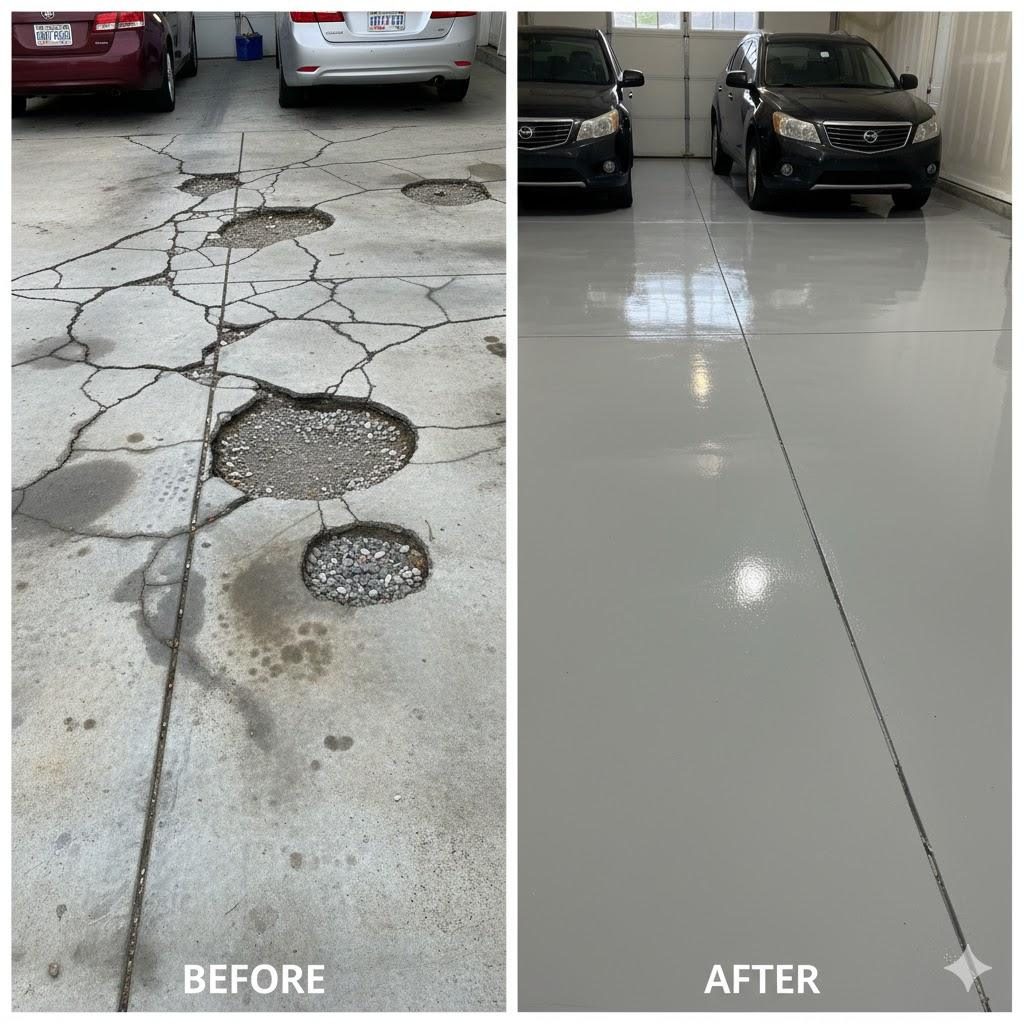
Worn but intact residential garage floor — excellent candidate for topcoat refresh. Clean, lightly abrade, apply new polyaspartic. Cost is a fraction of full replacement; result is close to new with another decade of service.
Previous DIY paint job peeling at edges — needs to come off. Paint that's releasing will take new coating with it.
Failed coating from moisture — any floor with widespread bubbling or delamination starting at the interior of the slab is a moisture failure. Recoating without addressing moisture will produce the same result. Removal, moisture testing, appropriate mitigation, and then a new system.
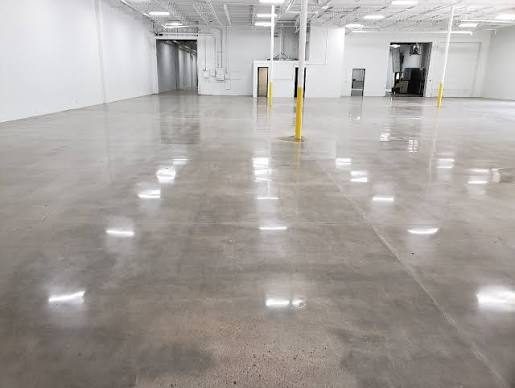
Industrial facility with worn topcoat — often a strong candidate for topcoat refresh. The base coat does the heavy adhesion work; the topcoat is the sacrificial wearing surface. Refreshing it with appropriate prep is a cost-effective way to extend system life significantly.