Once you've decided on epoxy for your garage floor, the next question is the fun one: what should it look like? The three main directions — solid color, decorative flake, and metallic — each have a distinct personality, different practical characteristics, and a different price point. This guide goes deep on each one so you can make a choice you'll still be happy with in a decade.
Why the finish choice matters beyond aesthetics
It's tempting to think of the finish as purely decorative — a preference question like picking a paint color. But the finish choice actually affects several practical aspects of how the floor performs:
- Slip resistance — texture from the finish itself (particularly from broadcast flake) provides natural grip. Smooth finishes may need anti-slip additives.
- How forgiving it is of dirt and imperfections — a solid color shows everything; a busy flake pattern hides a lot.
- The underlying system — different finishes use different base coat and topcoat approaches, which affects durability.
- Application complexity and cost — a solid color is the most straightforward; metallic is the most complex and labor-intensive.
Solid color epoxy
What it is and how it's applied
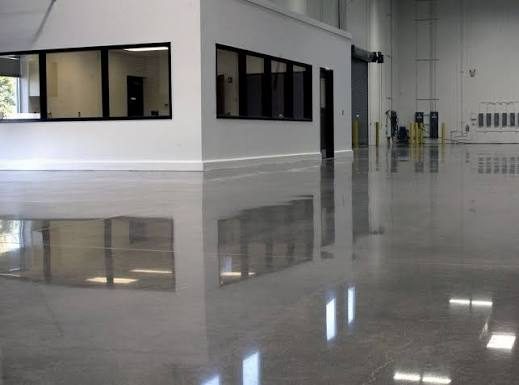
A solid-color system is exactly what it sounds like: a pigmented base coat applied to the prepared slab, typically followed by a clear topcoat. Some systems use a pigmented topcoat instead of a clear one. The result is a uniform, single-color surface without any decorative elements in the coating itself.
The most common color choices are various shades of gray (light gray, medium gray, slate gray), though any color is achievable. Tan, beige, charcoal, and safety colors like OSHA yellow for line marking are all standard options.
Performance characteristics
Solid colors are durable and easy to clean — the non-porous surface wipes up oil and road salt efficiently. The main practical trade-off is visibility: everything shows on a solid color. Dust, tire marks, scuff marks, and minor surface imperfections in the coating are all more visible than on a decorative finish. In a clean, well-lit garage this isn't necessarily a problem — some people prefer the clean, professional look. In a working garage that sees a lot of activity, a solid color requires more frequent attention to look its best.
Slip resistance on a smooth solid color depends on what's mixed into the topcoat. Without an anti-slip additive, a wet or slightly oily smooth epoxy surface can be slippery. Aluminum oxide or silica sand broadcast into the topcoat provides grip without significantly changing the appearance.
Best for
Solid color is the right choice for garages where a clean, industrial look is the goal, where budget is a primary consideration, or where the floor is for light residential use and will be well-maintained. It's also the right choice for commercial spaces that want a functional, tidy floor without decoration — service areas, back-of-house spaces, utility rooms.
Decorative flake (chip) systems
What it is and how it's applied
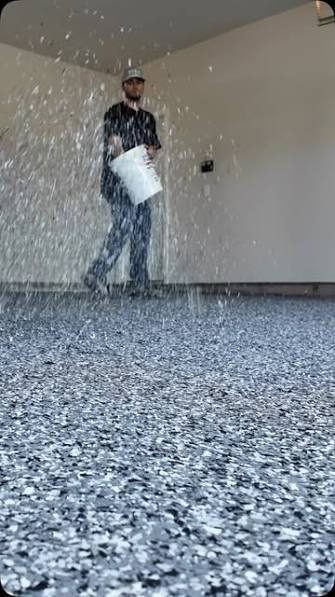
Flake systems — also called chip or broadcast systems — are the most popular choice for residential garages and a significant portion of commercial installs for good reasons. The process involves applying a base coat (pigmented epoxy or polyurea), then broadcasting vinyl color flakes across the wet surface — typically "to refusal," meaning the entire surface is covered. After the base coat cures, the excess flake is scraped off, the surface is lightly sanded to knock down high points, and a clear polyaspartic topcoat is applied over everything.
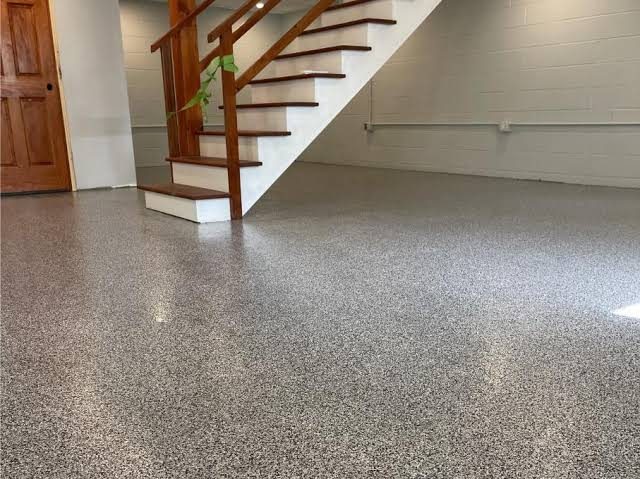
The result is a floor with visible depth — the flake embedded in the base coat shows through the clear topcoat, creating a three-dimensional appearance. The texture from the flake is subtle but real, providing natural slip resistance without any additives.
The flake blend question
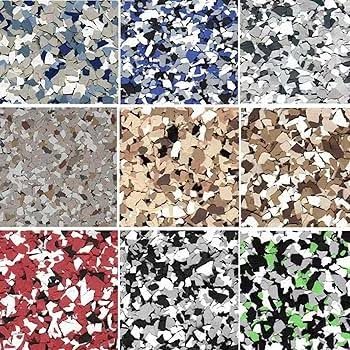
Flake comes in dozens of standard color blends and can be custom-blended. The most popular residential blends use two to four colors in neutral tones — beiges and grays, or blacks and whites, or earth tones — that read as a coherent pattern rather than random color. Bolder blends are available for customers who want more contrast or a specific color story.
Flake size matters too. Standard flake is around 1/4 inch (the most common and most forgiving in appearance). Smaller "micro" flake creates a finer, more subtle pattern. Larger flake creates a bolder, more graphic look. The size of flake you choose affects both the aesthetic and the texture of the finished surface.
One of the advantages of seeing physical samples at your estimate rather than just photos is that flake blends look genuinely different under different lighting conditions. A blend that looks bold and contrasty in a bright showroom may read as subtle in your dimly lit garage, and vice versa.
Performance characteristics
Flake systems punch above their weight class on practical performance. The multi-color pattern hides dirt, dust, tire marks, and minor surface imperfections far more effectively than a solid color — meaning the floor looks good with less frequent attention. The texture of the broadcast flake provides inherent slip resistance, which is a meaningful safety benefit in a garage environment where wet tires and the occasional spill are normal.
With a quality polyaspartic topcoat, a full flake system is highly resistant to hot-tire pickup, chemicals, and abrasion. It's arguably the most practical finish available for a residential garage that gets regular use.
Best for
Most residential garages. Working garages that see real use — tools on the floor, cars being worked on, outdoor gear coming in wet. Spaces where you want a floor that looks great without constant attention. The sweet spot of performance, looks, and value for the vast majority of garage floor projects.
Metallic epoxy
What it is and how it's applied
Metallic epoxy is fundamentally different from both solid color and flake. Rather than applying pigmented base coats and decorative elements, metallic systems use ultra-fine metallic or pearlescent pigments suspended in a clear or translucent resin. The installer manipulates the wet coating — using specific tools and techniques including squeegees, rollers, compressed air, and sometimes alcohol to create movement effects — to produce a three-dimensional, flowing, marbled appearance with real depth.
The manipulation is where the artistry lives. Two installers using the same product on the same day can produce very different results depending on their technique. No two metallic floors are ever identical, even when the same colors are used. This uniqueness is a significant part of the appeal.
Color and design options
Metallic pigments come in a wide range of colors — copper, bronze, silver, gold, blue, green, black, and combinations of all of them. The most popular effects tend toward the dramatic: molten copper swirling through dark charcoal, ocean-like blues and greens, deep galaxy-style dark backgrounds with silver movement. More subtle treatments are possible but less common because the effect benefits from contrast.
Some metallic installations incorporate multiple colors layered and blended; others use a single pigment for a cleaner, more refined look. The installer's experience with the specific products and techniques is the most important factor in the outcome quality.
Performance characteristics
Metallic epoxy surfaces are typically smooth — the movement effects are created by manipulating the coating, not by adding texture. This means slip resistance isn't inherent, and an anti-slip additive broadcast into the topcoat is usually recommended, particularly in residential garages where wet tires are common.
Durability is excellent when properly installed with a quality polyaspartic topcoat. The smooth surface is actually slightly easier to clean than a textured flake floor. UV stability depends entirely on the topcoat — a polyaspartic clear over a metallic base maintains color and gloss very well.
Best for
Showroom garages and collector car storage where the floor is as much a design element as a functional surface. Retail spaces, studios, and commercial spaces that want a striking, one-of-a-kind floor. Entryways, basements converted to living space, and anywhere else where you want the floor to be something people actually comment on. The premium price is justified when the look is the point.
Side-by-side summary
Solid color — most affordable, cleanest look, shows everything, needs anti-slip additive. Best for light-use or commercial utility spaces.
Decorative flake — best all-around for working garages: hides dirt, inherently slip-resistant, durable, wide color range, best value. The go-to recommendation for most residential projects.
Metallic — most unique and visually striking, premium price and skill requirement, best for spaces where the floor is a design feature. Needs anti-slip treatment.
How to make the final decision
A few questions that help narrow it down:
- How will the garage actually be used? A working garage with tools, vehicles, and outdoor gear benefits most from flake. A display garage or converted living space may warrant metallic.
- How much maintenance are you willing to do? Flake is the most forgiving on maintenance. Solid color shows more. Metallic is easy to clean but shows water spots more than a busy pattern.
- What's the design language of the home? A contemporary, minimalist home might suit a solid color or subtle metallic. A more traditional home typically looks best with a neutral flake blend.
- What's the budget? Solid is the most economical, flake is the mid-range sweet spot, metallic is the premium option.
The most useful thing you can do before deciding is see physical samples in your own space under your own lighting. We bring samples to every estimate precisely because colors and finishes look different in photographs than they do in person. The right choice becomes much clearer when you can hold a sample chip on your own floor.
A note on color trends
Flooring is a long-term investment, so it's worth thinking about whether a trend-driven choice will still appeal to you in ten years. The most consistently popular and resale-friendly options tend to be neutral flake blends in the gray, beige, and earth-tone families — they read as refined and clean without being dated. Bold metallics and bright solid colors are personal and striking, but they're also more specific to a moment in time. If you're planning to sell the home within a few years, neutral is the safer bet. If it's your forever garage, go with what you love.