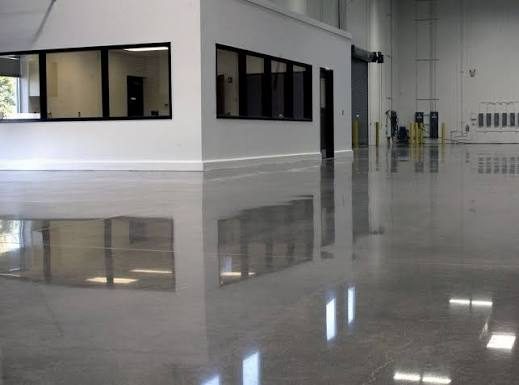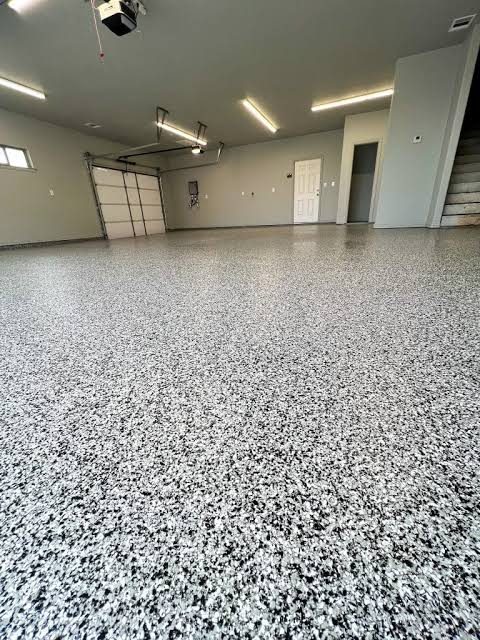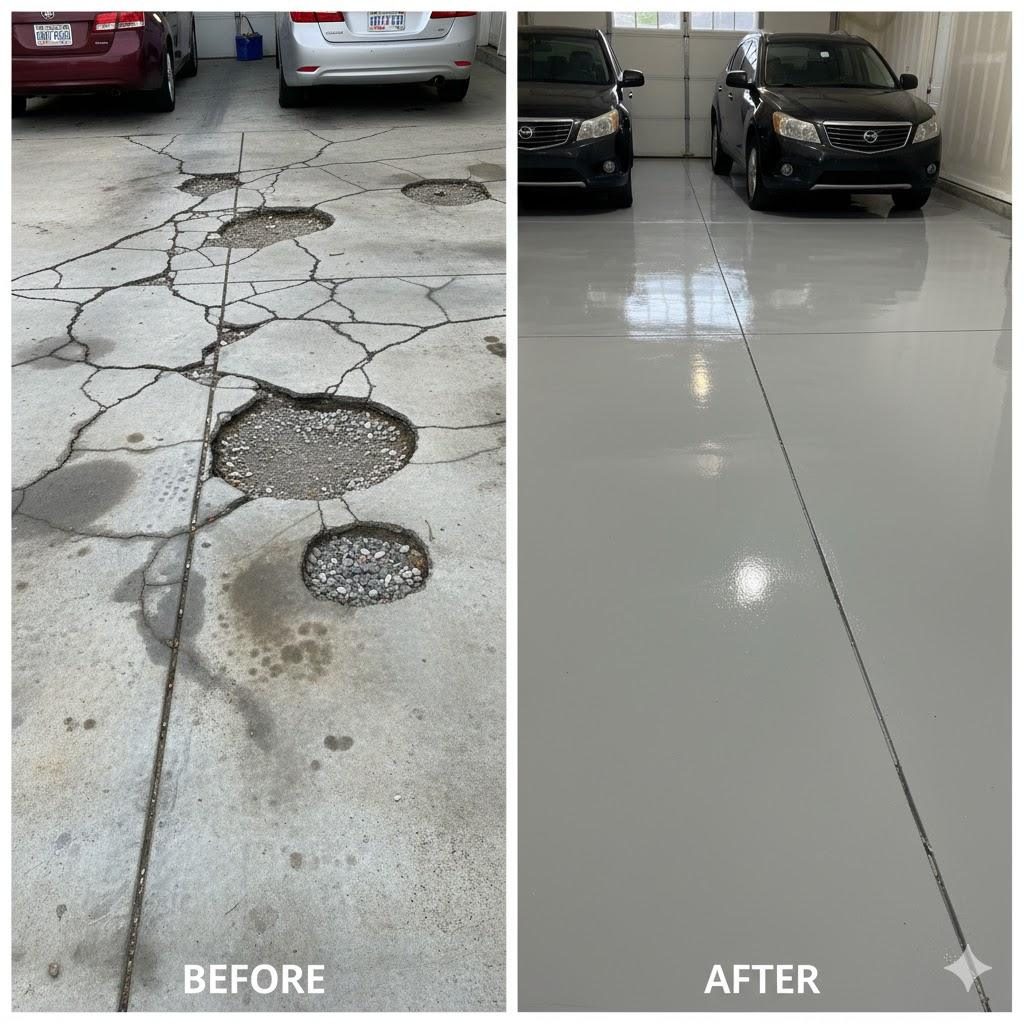
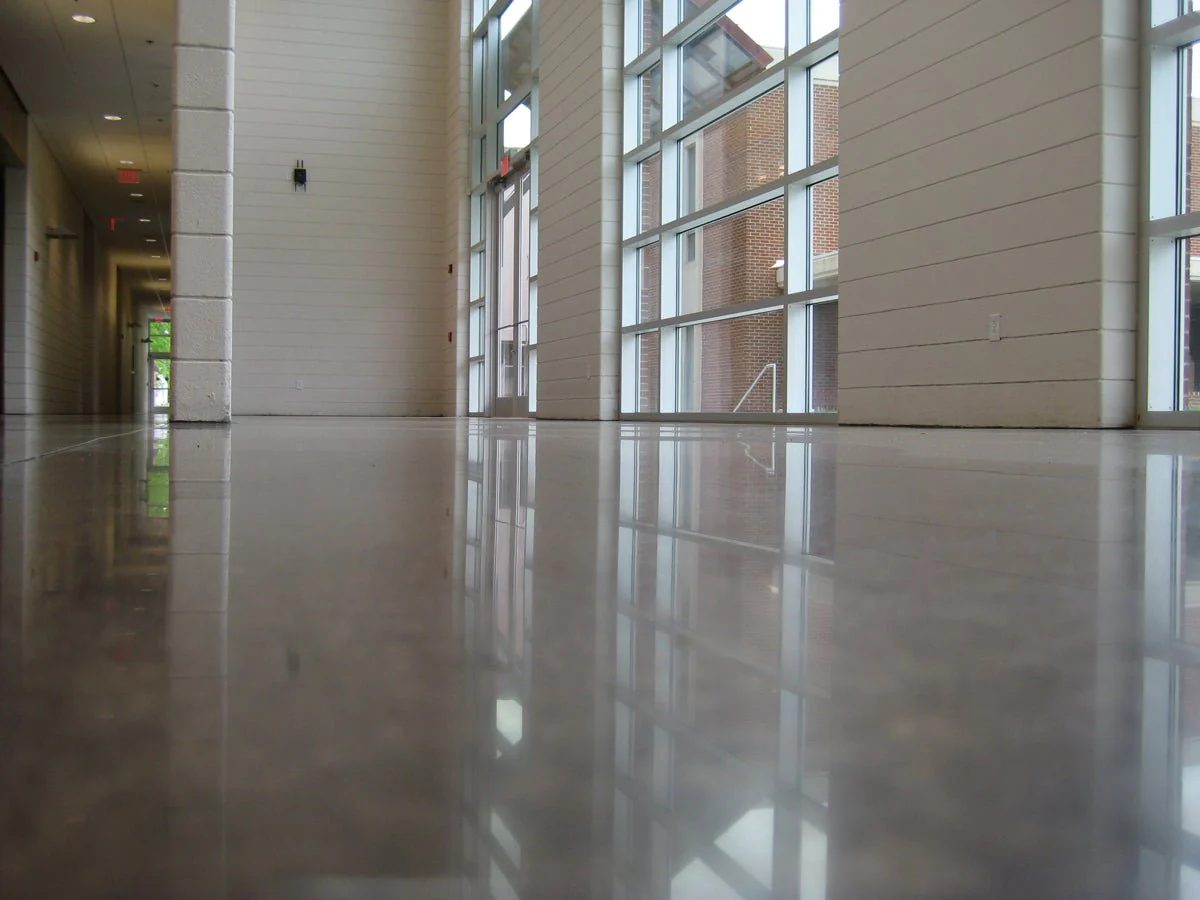
One of the most common things people say after getting a quality epoxy or polished concrete floor is that it's so much easier to keep clean than what they had before. That's true — both finishes are genuinely low-maintenance compared to bare concrete, tile, or carpet. But "low maintenance" doesn't mean "no maintenance," and a few simple habits make the difference between a floor that looks great at year ten and one that's lost its luster by year three.
This guide covers everything you need to know for both finish types: daily care, weekly cleaning, what to avoid, how to handle spills and stains, seasonal considerations, and the occasional maintenance tasks that keep a floor looking its best long-term.
The single most important habit for either finish
If you only change one behavior after reading this guide, make it this: sweep or dust mop regularly.
Fine grit — the dust and small particles tracked in from outside, construction debris, sand from winter roads — is the number one enemy of both epoxy coatings and polished concrete. Under foot traffic and vehicle tires, grit acts like fine sandpaper against the floor surface, causing microscopic scratches that accumulate over time and progressively dull the finish. A floor that looks great after installation but never gets swept will look noticeably worn within a few years. The same floor swept weekly will look close to new at the same point.
This is especially true for polished concrete, where the gloss level is a function of how fine the scratches in the surface are — and fine grit scratches are exactly what you're adding when you don't sweep. It's less critical for flake epoxy, where the texture already breaks up the reflected light, but it still affects topcoat longevity.
Daily and weekly cleaning: epoxy floors
Regular sweeping or dust mopping
A microfiber dust mop picks up fine grit and dust more effectively than a broom, which tends to push it around. For garages and larger spaces, a dust mop with a wide head moves efficiently. For a residential garage, a quick dust mop or leaf blower to push debris to the door takes minutes and makes a real difference.
Damp mopping
When the floor needs more than a sweep — visible dirt, salt residue, or general grime — damp mop with warm water and a pH-neutral cleaner. The "pH-neutral" specification matters: acidic cleaners (anything with vinegar, citrus, or general-purpose formulations that include acidic ingredients) can degrade the epoxy topcoat over time. Most floor-specific cleaners are pH-neutral; many common household cleaners are not. When in doubt, check the label or use plain warm water.
For residential garages, mopping is typically needed every few weeks during normal use, and more frequently in winter when road salt is tracked in regularly.
Spot cleaning
Most spills on an epoxy floor simply sit on the surface and wipe up easily with a damp cloth or mop — this is one of epoxy's great practical advantages. Oil, antifreeze, and automotive fluids can be wiped up with a shop towel or paper towels, followed by a damp mop with a mild cleaner. The key is reasonably prompt attention: extended contact with harsh chemicals, particularly concentrated solvents, can soften or damage the topcoat.
Daily and weekly cleaning: polished concrete
Dust mopping
Same principle as epoxy, and even more important. Grit is the primary degradation mechanism for polished concrete, and regular dust mopping is the most protective thing you can do. Microfiber dust mops are standard in commercial polished concrete settings for exactly this reason.
Damp mopping
pH-neutral cleaners are non-negotiable for polished concrete. Acids etch the calcium silicate in the polished surface, dull the gloss, and are irreversible without re-polishing the affected area. This means no vinegar (including "cleaning vinegar" marketed as natural), no citrus-based cleaners, no bleach-and-ammonia combinations. Specific polished concrete cleaners are available and worth using; plain water is a safe fallback.
Auto-scrubbers with soft pads are common in commercial settings and are extremely effective. For residential polished concrete, a standard mop with a soft head and the right cleaner works well.
Standing water
Polished concrete is not as impervious to water as a coated floor. While a densified and guarded surface resists staining from many liquids, extended standing water can penetrate and leave marks, particularly if the guard has depleted. Wipe up pools of water rather than letting them evaporate.
What to avoid: the short list for both finishes
Abrasive cleaning tools
Steel wool, scrubbing pads with abrasive faces, and scouring powders scratch both epoxy topcoats and polished surfaces. For stubborn spots, let a wet cleaner dwell for a few minutes to loosen the material, then wipe with a soft cloth. Elbow grease with a soft tool beats a light touch with an abrasive one.
Acidic cleaners
Bleach is fine occasionally on epoxy (though it shouldn't be routine), but acidic cleaners damage both finishes over time. If you're using a cleaner and you're not sure of its pH, test it on an inconspicuous area or look up the MSDS/SDS sheet for the product.
Dragging heavy objects
Sliding a tool chest, workbench, motorcycle, or appliance across either floor type will gouge or scratch it. Lift, use a furniture dolly with soft rubber wheels, or lay down plywood to distribute weight and allow sliding for very heavy equipment moves.
Jack stands and point loads
High point loads from jack stands, hydraulic jacks, and equipment feet concentrate force on a very small area. Over a quality polyaspartic topcoat, jack stands with standard metal feet can dent or indent the coating. Placing small pieces of plywood or rubber pads under jack stands protects the floor without affecting their function.
Prolonged chemical contact
Both epoxy coatings and polished concrete surfaces tolerate brief contact with most chemicals without damage. Extended contact is a different story — concentrated solvents, harsh acids, and highly alkaline chemicals can attack epoxy coatings, and acids will etch polished concrete. Wipe up chemical spills promptly, and if a large spill occurs, neutralize and rinse as appropriate.
Winter and seasonal care
the Mountain West winters introduce specific challenges for garage floors:
Road salt and de-icing chemicals — tracked in on tires and vehicle undercarriages, road salt is mildly corrosive and, more practically, leaves white residue when it dries. It won't immediately damage a quality epoxy topcoat, but repeated salt accumulation that's left unaddressed can gradually degrade the surface chemistry of some topcoat formulations. The solution is simple: mop the garage floor more frequently in winter, especially after driving on salted roads.
Tire tracking — wet tires carry in grit and road chemicals. Placing a floor mat at the garage entry (not rubber-backed — rubber can stain epoxy if left long-term; use a mat with a polypropylene backing) catches a significant amount of what would otherwise go onto the floor.
Temperature and condensation — in very cold weather, a concrete floor can be cold enough that warmer humid air condenses moisture on the surface. This is mostly a cosmetic issue (temporary fogging of the finish) that resolves as temperatures equalize, but it's worth knowing about if you notice it.
Stain removal: specific situations
Oil and grease
Wipe up fresh oil immediately with shop towels or paper towels — absorb, don't smear. Follow with warm water and a degreasing cleaner (Dawn dish soap works in a pinch). For dried or old oil stains on epoxy, a solvent like acetone can lift them, applied carefully and rinsed quickly (acetone is aggressive — don't let it dwell). On polished concrete, old oil stains may have penetrated beyond the guard; a poultice with a drawing compound may help.
Tire marks
Tire marks (black rubber transfer from tires, distinct from hot-tire pickup) often wipe up easily with a damp cloth or solvent. If they're stubborn, a commercial degreaser applied and scrubbed with a soft-bristle brush usually handles them. Don't confuse tire marks with hot-tire pickup (coating failure) — tire marks are surface deposits, not coating damage.
Rust stains
Rust stains from metal tools, cans, or fasteners left on the floor can be treated with a commercial rust remover appropriate for sealed surfaces. Test in an inconspicuous area first. On polished concrete, rust stains are harder to address because they may have penetrated the surface; professional treatment may be needed.
Paint
Fresh latex paint wipes up easily. Dried paint may need gentle scraping with a plastic scraper (not metal — it will scratch) followed by a solvent. Oil-based paint requires solvent from the start.
Long-term care: the occasional tasks
For epoxy floors: topcoat refresh
A quality polyaspartic topcoat on a residential garage floor can last 10–15 years before showing significant wear in high-traffic areas. When the topcoat does wear, the most cost-effective approach is cleaning the floor thoroughly, lightly abrading the surface for adhesion, and applying a new clear topcoat. This is far less expensive and involved than redoing the full system, and it extends the life of the base coat and decorative layer significantly.
For polished concrete: re-burnishing
In high-traffic areas, the microscopic peaks of the polished surface gradually wear down, reducing reflectivity. A re-burnish with a high-speed burnisher and the appropriate crystallization pad restores the gloss without removing material. In commercial settings, this may be scheduled regularly. In residential settings, it's less frequently needed and can be done as-needed when you notice a reduction in shine.
For polished concrete: guard reapplication
The penetrating guard applied during installation gradually depletes in high-traffic areas over time. Reapplication every 1–3 years (depending on traffic) maintains the stain resistance of the surface. It's a simple process — clean the floor thoroughly, apply the guard per manufacturer instructions, allow to penetrate, and buff off the excess.
The maintenance summary
Every week (or more): dust mop or sweep. As needed: damp mop with pH-neutral cleaner. Promptly: wipe up spills, especially chemicals and road salt. Always avoid: acidic cleaners, abrasive tools, dragging heavy objects, prolonged chemical contact. Occasionally: topcoat refresh (epoxy) or re-burnish and guard reapplication (polished concrete). That's the full picture — and none of it is demanding.
When to call a professional
Some situations are beyond routine maintenance:
- Delaminating or peeling coating — needs professional assessment and likely re-prep and recoat
- Deep gouges or damage to the coating down to the concrete — can usually be spot-repaired by a professional
- Significant reduction in polished concrete gloss across a large area — may benefit from professional re-polishing rather than just re-burnishing
- Persistent staining that home remedies haven't resolved
Many of these situations are more repairable than they look. If you're not sure whether your floor needs professional attention or just better maintenance habits, we're glad to take a look and tell you honestly what it needs.