If you've gathered a few quotes for an epoxy garage floor, you've probably noticed they're all over the map. One contractor quotes a number that seems almost too low, another is significantly higher, and a third is somewhere in between — and it's genuinely hard to know what you're actually comparing. This guide breaks down what drives the price, what a good quote actually includes, and how to tell the difference between a lasting investment and an install you'll be redoing in two years.
The variables that drive cost
Epoxy flooring isn't a commodity where price directly reflects quality in a simple way. Two installs of similar cost can produce very different results depending on these factors:
1. Square footage
This is the starting point for any quote. A standard single-car garage is roughly 200–250 square feet; a two-car garage runs 400–500 square feet; a three-car or oversized garage can be 700 square feet or more. Most flooring is priced per square foot, so size sets the baseline. That said, per-square-foot prices often decrease as square footage increases — the setup, mobilization, and edge work are roughly the same regardless of size, so larger floors are more efficient.
2. Surface prep and slab condition
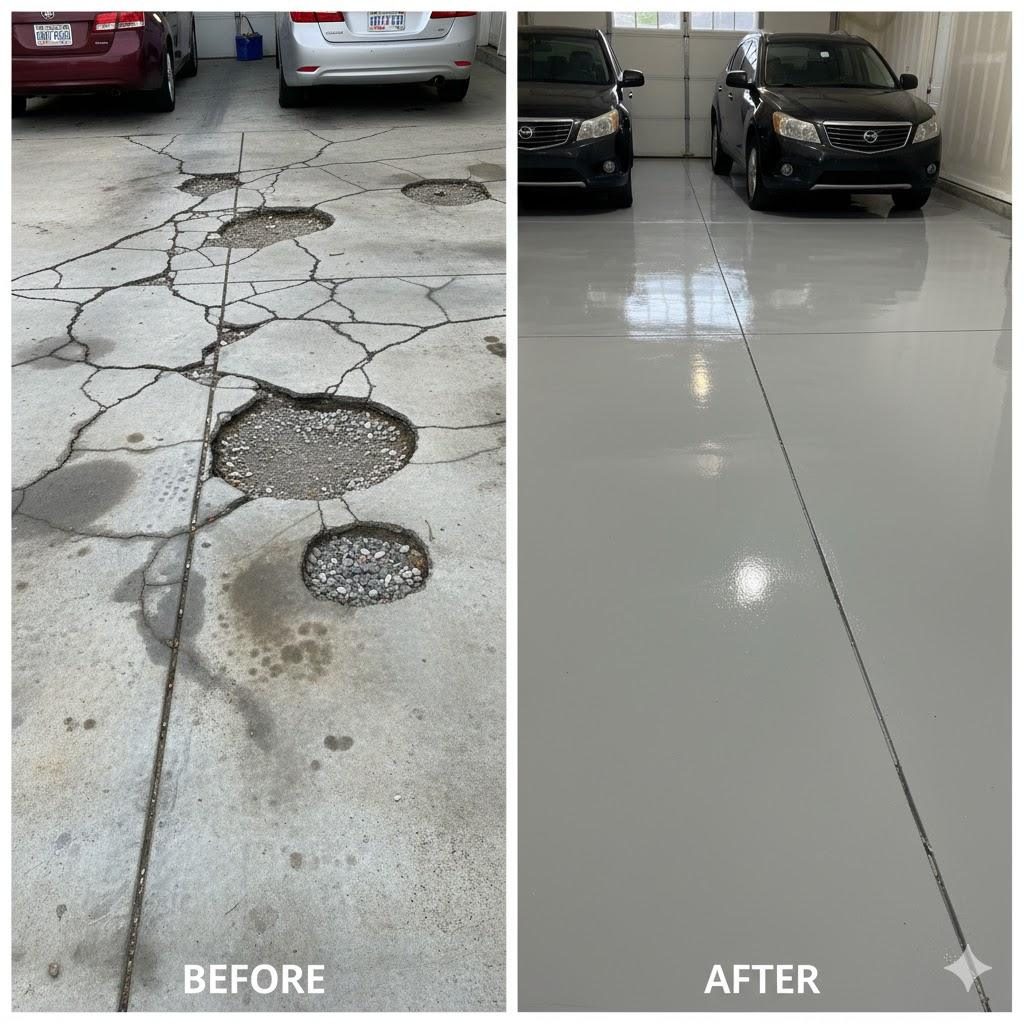
This is the hidden variable that separates lasting floors from failing ones — and the one most often skimped on by low-price installers. Proper mechanical preparation means diamond grinding the slab to a specific surface profile (measured in CSP — Concrete Surface Profile units) so the coating can bond. A slab that's never been coated, in good shape, with no contamination requires the minimum prep. A slab with any of the following adds time and cost:
- Previous paint or coating that needs to be removed
- Oil or chemical contamination that requires degreasing and may need shot blasting
- Cracks that need to be routed, cleaned, and filled with semi-rigid filler
- Spalling or pitting that needs patching compound
- Moisture issues that require a vapor-mitigation primer
- Control joint work — filling or capping expansion joints
A low quote that doesn't mention prep specifics is almost always skipping some of these steps. And when they're skipped, the coating fails — often within the first year or two.
3. The coating system
Not all epoxy systems are equal, and the system specification is one of the biggest quality differentiators:
Basic single-coat solid color — the most economical option. A primer/base coat and a clear topcoat. Minimal film build, adequate for light residential use but not the most durable long-term choice.
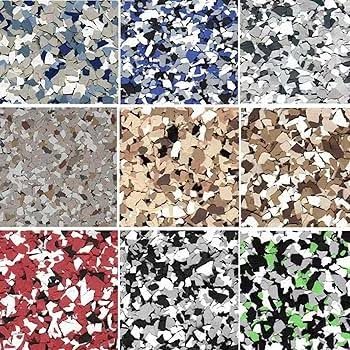
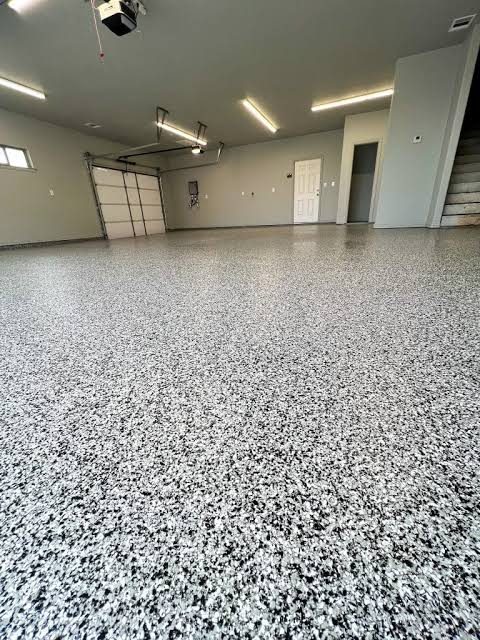
Full flake broadcast system — the most popular residential choice. A base coat (epoxy or polyurea), a full broadcast of decorative vinyl flake to refusal (meaning the surface is completely covered), scraping the excess, and sealing under a clear polyaspartic topcoat. This system hides imperfections, adds natural slip resistance, and the polyaspartic topcoat resists UV, abrasion, and hot tires far better than a basic epoxy clear. This is the system most quality contractors recommend for garage floors.
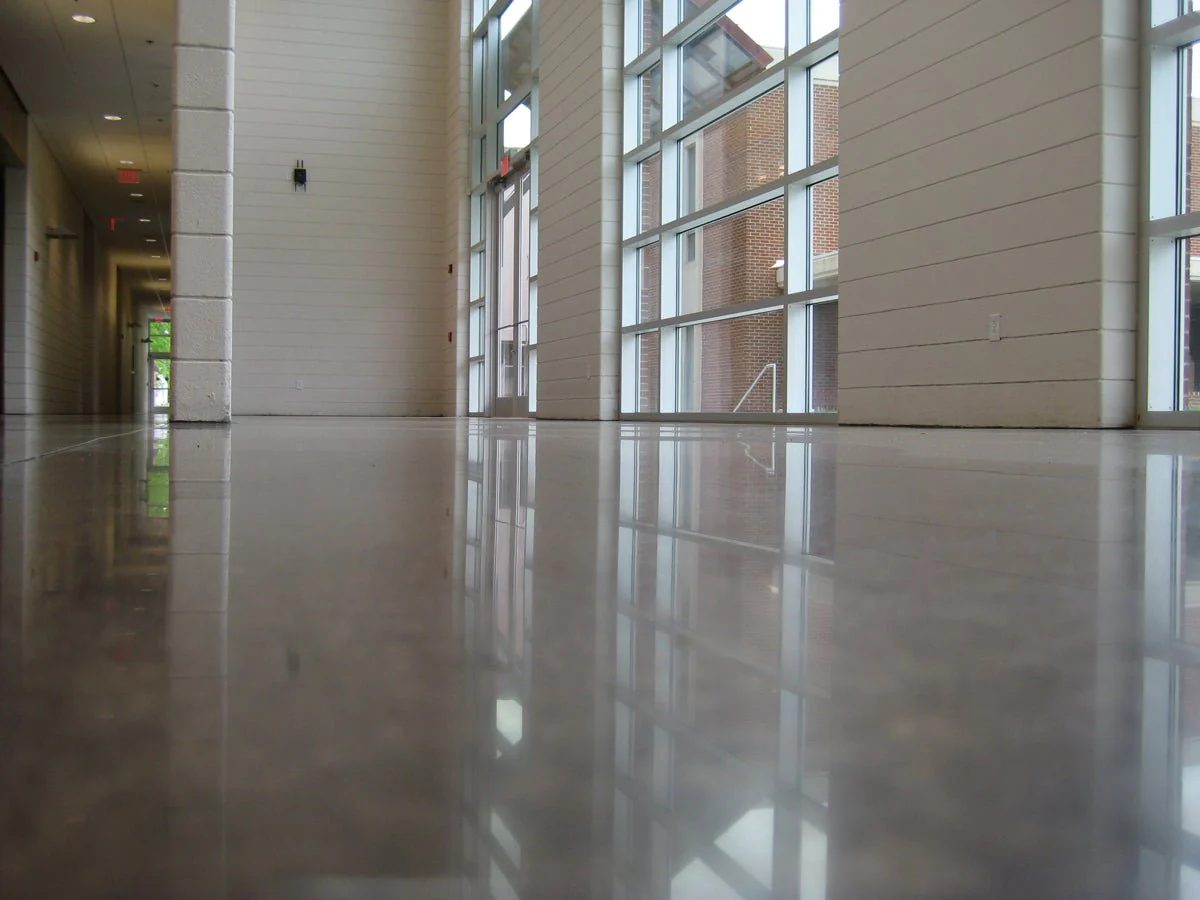
Metallic epoxy — the premium decorative option. Metallic pigments are suspended in resin and manipulated as they cure to create unique, three-dimensional marbled effects. No two metallic floors are identical. They require more skill and time to install correctly and are priced accordingly.
Industrial/commercial systems — high-build epoxy systems (100+ mils) for warehouse and facility floors, often with anti-slip aggregate, chemical-resistant formulations, and safety line striping. These are priced by the project rather than simple per-square-foot rates because the variables are more complex.
4. Topcoat choice
The topcoat is what you walk, drive, and live on — and it matters more than most people realize. Standard epoxy clears will amber and yellow in UV light, meaning a garage with any sunlight exposure will see color shift over time. Polyaspartic topcoats are UV-stable, cure faster (allowing same-day or next-day use), and generally outperform epoxy clears on abrasion resistance and chemical resistance. They cost more per gallon but are almost always worth it for a residential garage.
5. Extras that add real value
A few line items that appear in quality quotes and are genuinely worth the cost:
- Moisture testing — a calcium chloride or relative humidity test before work begins. Skipping this is a gamble.
- Crack routing and filling — proper repair rather than just grinding over cracks.
- Control joint treatment — filling or capping expansion joints so they don't telegraph through the coating.
- Anti-slip aggregate — broadcast into the topcoat for wet-area safety.
- Written warranty — a contractor who stands behind the work in writing.
DIY kits: the real cost comparison
Hardware store epoxy kits are significantly cheaper upfront — sometimes under $100 for a one-car garage. Here's the honest comparison:
Store-bought kits are typically thin, low-solids products that rely on acid etching for prep rather than mechanical grinding. The acid etch produces an inconsistent surface profile and leaves residue that compromises adhesion. The product itself is thinner and less durable than professional-grade systems.
The result is almost always the same: hot-tire pickup, peeling at the edges, and color fade within one to three years — sometimes less. At that point, the failed coating has to be mechanically removed (which costs more than the original prep would have), and the floor has to be done professionally anyway. You end up paying twice.
For a small basement or utility area where aesthetics don't matter much and traffic is light, a DIY kit might make sense. For a garage you want to actually look good and last, the math almost always favors doing it right once.
What a trustworthy quote looks like
A quote worth trusting doesn't just list a price — it explains what's being done. Look for these specifics:
- Prep method — "diamond grinding" is what you want to see. "Acid etch" or nothing at all is a red flag.
- Number of coats and products — what's the base coat? What's the topcoat? Are they named products or just "epoxy"?
- Crack and repair work — is it included or extra? What's the process?
- Cure and return-to-service timeline — when can you walk on it? Drive on it?
- Warranty terms — what's covered, for how long, and under what conditions?
If a quote is a single line-item total with no breakdown, ask for the specifics. A professional contractor should be able to tell you exactly what they're doing and why.
The bottom line on price
A professionally installed flake epoxy garage floor is one of the higher-return upgrades you can make to your home — it protects the slab, dramatically reduces cleaning time, and adds genuine appeal. The price range is wide because quality varies enormously. The best way to protect your investment is to understand what prep is being done, what system is being installed, and whether the contractor stands behind it in writing. If you want a specific, itemized estimate for your garage, send us the size and a couple of photos of the current floor.
Frequently asked questions
How long does installation take?
Most residential garages are a one-day install for the application itself, but the timeline depends on the system. A polyaspartic topcoat can allow light foot traffic in hours and vehicle traffic within 24 hours. Full epoxy systems may require 72 hours before driving on them. Prep and repair work adds time before coating begins.
Do I need to move everything out of the garage?
Yes — the floor needs to be completely clear. That includes storage along the walls, because the grinder and coating need access to the full slab including the perimeter.
How long will it last?
A properly prepped and installed residential flake system with a polyaspartic topcoat should look good for 10–20 years under normal use. Industrial systems with heavier traffic may need topcoat refreshing sooner. The prep quality and topcoat choice are the biggest determinants of longevity.
Can you coat over an existing epoxy floor?
Sometimes, but it depends on the condition of the existing coating. If it's delaminating or peeling, it needs to be removed first. If it's sound but worn, a recoat over it may be possible after proper preparation. A site visit is the only way to give a reliable answer.