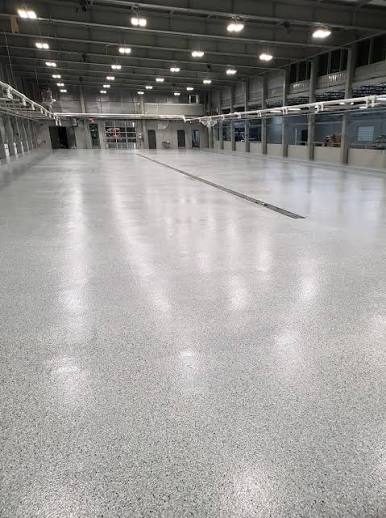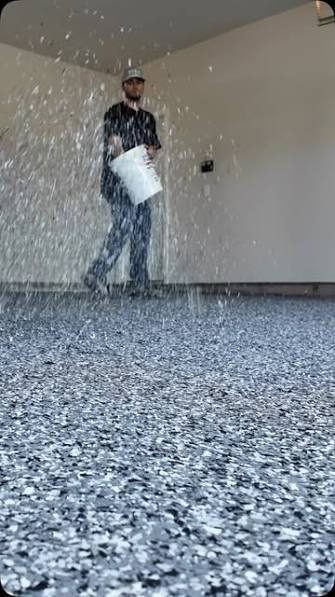
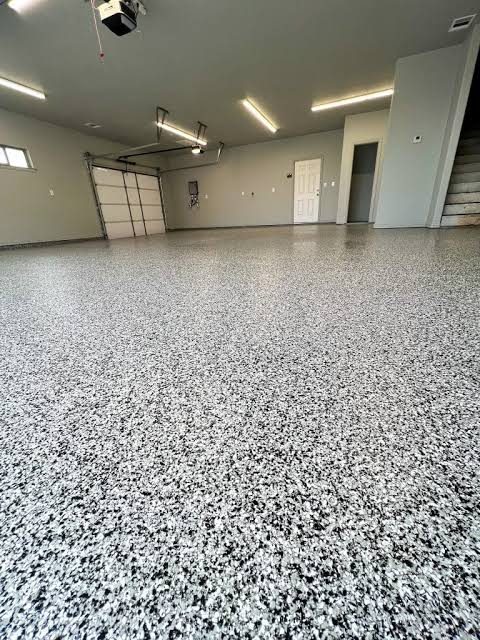
The most important decision in an epoxy floor project isn't the finish color or the price. It's who installs it. The same materials over a properly prepared slab, installed by a skilled crew, will last twenty years. The same materials over a poorly prepared slab will start failing within two. The contractor is the variable that determines which outcome you get. Here's exactly how to evaluate one before signing anything.
Question 1: How do you prepare the floor?
What you want to hear: diamond grinding. Mechanically grinding the slab with diamond-tooled equipment to open the surface, create the right profile, and remove any existing sealers, coatings, or contamination.
Red flags: acid etch, "thorough cleaning," or any answer that doesn't specifically mention mechanical grinding. Acid etching is the most common prep shortcut and the most common cause of early floor failure.
Follow-up: "What surface profile do you target?" A contractor who knows about Concrete Surface Profile (CSP) and specifies a target is demonstrating technical depth. Confusion about the question suggests they're not doing sophisticated prep.
Question 2: Do you test for moisture?
What you want to hear: yes, with a specific method — calcium chloride test (ASTM F1869) or relative humidity probe test (ASTM F2170). They should test after grinding, not before.
Red flags: "We check it visually," "We haven't had moisture problems," or any answer that doesn't reference a specific testing method. Moisture is invisible and doesn't announce itself.
Follow-up: "What happens if the reading is high?" The answer should be that they recommend a moisture-tolerant primer and explain what that adds to cost. Any answer suggesting they proceed regardless of the reading is a red flag.
Question 3: What products do you use?
What you want to hear: specific product names or lines, with explanation of why each was chosen. The topcoat should be polyaspartic or another aliphatic formulation — UV-stable and won't yellow. An unwillingness to share product data sheets on request is a red flag.
Follow-up: "Can you share the technical data sheets for the products you plan to use?" A professional contractor has these readily available.
Question 4: What does the system include — how many coats?
What you want to hear: a specific system description with each coat named and its purpose explained. For a residential flake floor: primer or base coat, flake broadcast, and clear polyaspartic topcoat at minimum. The total system dry film thickness (DFT) should be specified.
Red flags: a one-coat system without a separate topcoat. Inability to describe what each coat does. Significant complexity discrepancy between competing bids without explanation.
Question 5: Do you offer a written warranty?
What you want to hear: yes, with specific terms — what's covered, for how long, and what the claims process is. Ask to see the actual warranty document before signing the contract.
Red flags: verbal warranty only, warranties covering only materials but not labor, terms under a year, or warranty language that excludes so many conditions it provides no real protection.
Question 6: Can you show me photos of previous work — from more than a year ago?
What you want to hear: yes, with photos from multiple projects at different ages. Any contractor can show a floor that looks good the day it's installed. Photos of floors that are 3, 5, or 10 years old tell you about durability.
Follow-up: actually call the references. Ask specifically: "How is the floor holding up? Has anything peeled or shown problems? How was any issue handled?"
Question 7: How do you handle cracks and repairs?
What you want to hear: cracks are routed (cut wider with a crack-chasing saw), cleaned out, and filled with an appropriate semi-rigid filler before any coating is applied. Control joints are treated separately with material that allows movement.
Red flags: "We coat over them" without any routing or filling process. Using the same rigid material for cracks and control joints.
Question 8: What are your temperature and condition requirements?
What you want to hear: the contractor knows the product's temperature requirements and explains how they ensure those conditions are met. For cold-weather installs, they have a plan for monitoring and maintaining adequate temperatures.
Red flags: no awareness of temperature requirements, or willingness to proceed regardless of conditions.
Question 9: Are you licensed and insured?
What you want to hear: yes, with specifics — a valid contractor's license, general liability insurance, and workers' compensation coverage. They should provide certificates on request.
Why it matters: if a worker is injured on your property and the contractor doesn't carry workers' comp, you may have liability exposure. If the contractor damages your property, liability insurance is what pays for it.
Question 10: What's your return-to-service timeline?
What you want to hear: specific timelines for foot traffic and vehicle traffic, based on the products being used. For polyaspartic systems: foot traffic within a few hours, vehicle traffic within 24–48 hours. Longer timelines for standard epoxy systems.
Follow-up: "What are the restrictions during the full cure period?" Understanding what to avoid in the first week (typically 7 days for full chemical cure) prevents accidentally damaging the floor before it's fully hardened.
The overall picture
A contractor who answers these ten questions specifically, confidently, and consistently knows their trade. Vague answers or defensiveness suggests they're either cutting corners or don't have the experience to understand why these details matter. The questions aren't designed to be difficult — they're the basics of professional flooring work. Any skilled, ethical contractor should welcome them.
Green flags: signs that indicate quality
- Shows up to the estimate with product data sheets and samples, not just a measuring tape
- Asks how you use the space before recommending a system
- Points out specific conditions on your slab — cracks, stains, previous coatings
- Is transparent about what's included and what's extra
- Doesn't pressure you to sign immediately
- Has an established business with a real address and verifiable contact information
Red flags summary
- Acid etch instead of diamond grinding
- No moisture testing process
- Can't name specific products being used
- Warranty is verbal or has excessive exclusions
- Significantly lower price than all other quotes without clear explanation
- Pressure to sign immediately or "price only good today"
- No license or insurance verification available
- No references who can speak to how the floor has held up over time
Price is a legitimate factor but a poor primary screen. The lowest price often reflects the lowest-quality prep and products. Within a reasonable range of quotes from qualified contractors, these questions will help you identify who actually knows their craft — and who you can trust with work you'll be living with for the next twenty years.